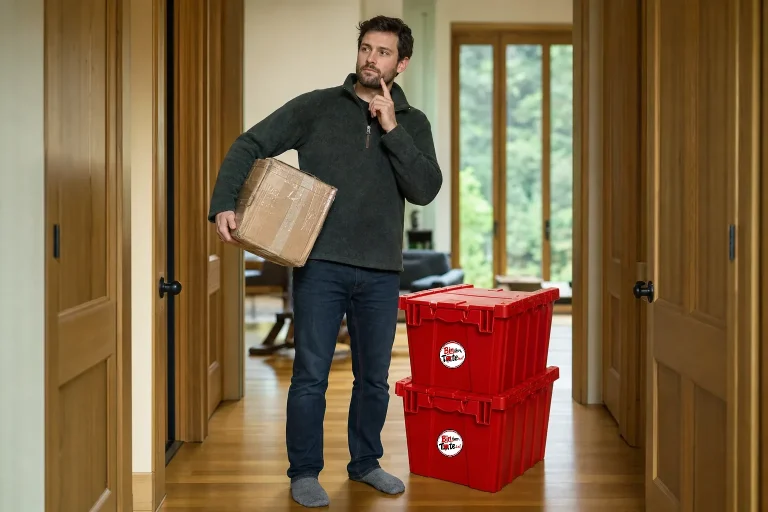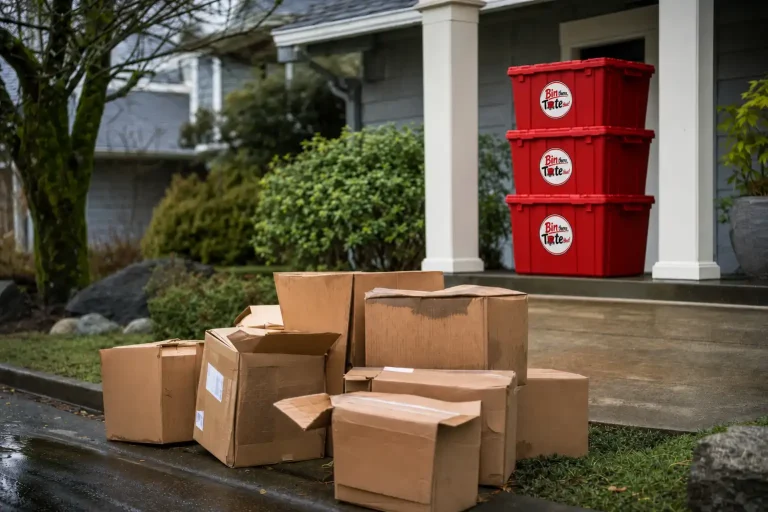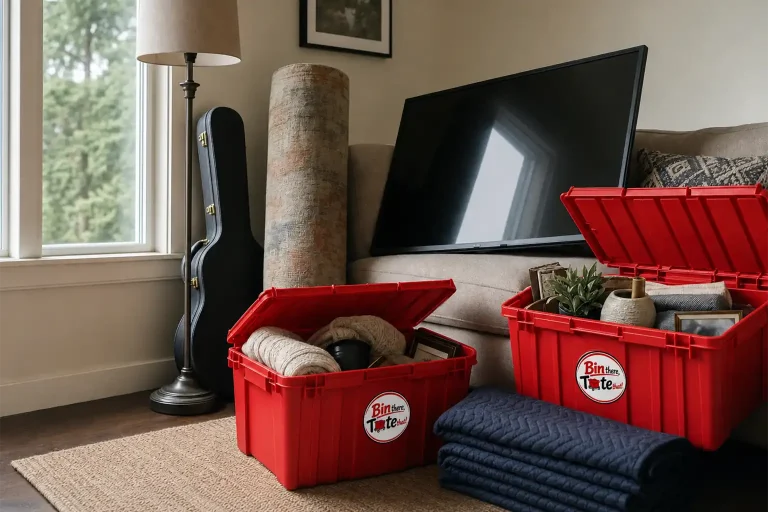
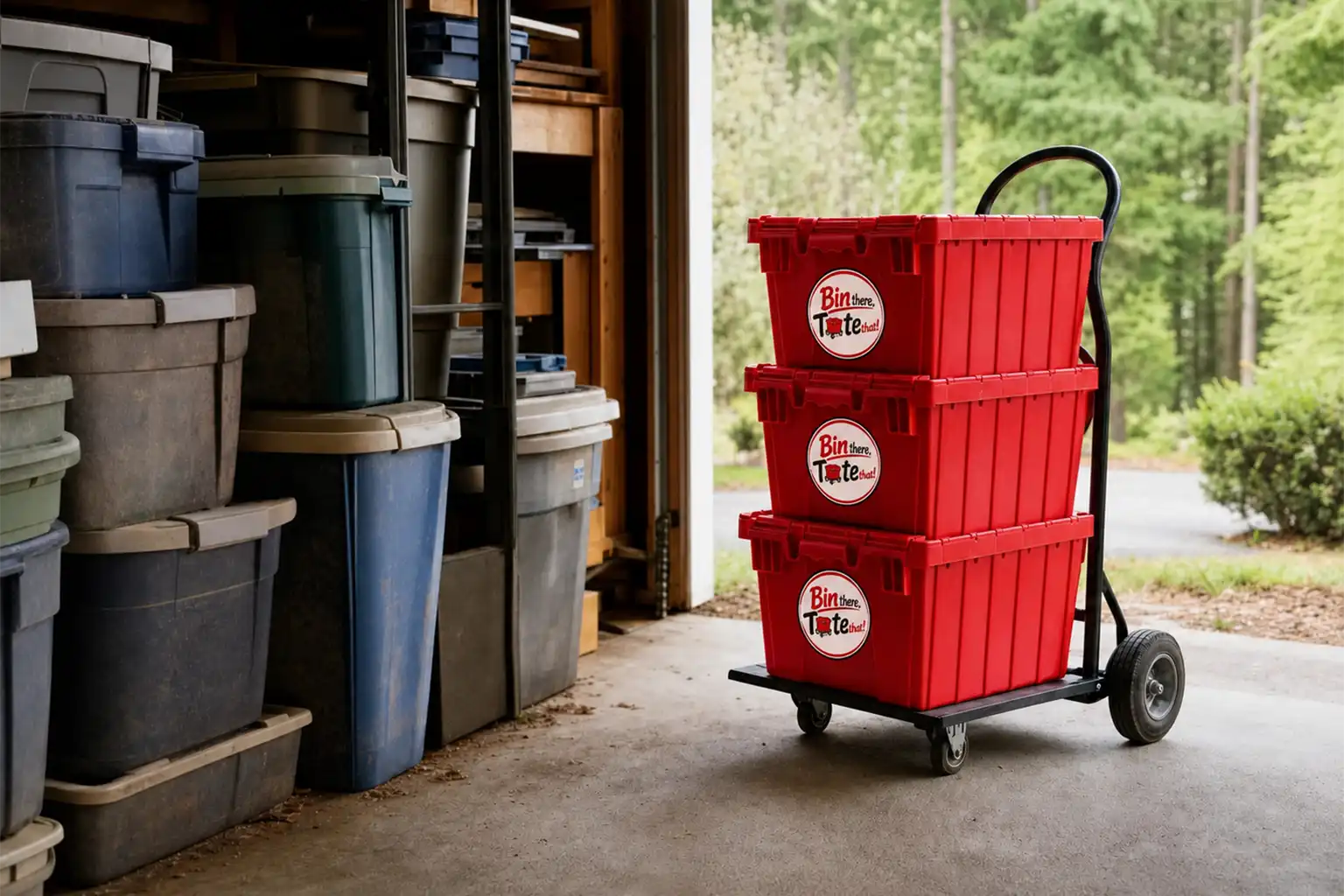
Buying Costco or HDX-style plastic bins for a move means paying per bin for containers you own forever, hauling them home yourself, and then housing a refrigerator-sized tower of empties for years after their two weeks of work. Renting from Bin There, Tote That! costs a flat $97 to $257 for two weeks of commercial-grade totes, delivered and collected free across the Portland-Vancouver metro areas with a hand truck included, as of July 2026.
Buying wins when the bins have a real storage job waiting afterward or the move leaves the region. If their only job is the move itself, renting is cheaper across the full ledger, because the purchase price is only the first installment of what owned bins cost.
What buying plastic bins actually involves
Warehouse clubs and big-box stores sell stackable plastic bins by the each, Costco pallets of them, HDX-style totes at the home centers, usually cheapest in multi-packs and seasonal promotions. Prices vary by size, thickness, and month, so check current listings rather than trusting a number from someone's two-year-old forum post. The pricing model is the important part: you pay per bin, you own every bin forever, and a whole-house move needs a lot of bins. Grade matters too: consumer bins are engineered for closet duty, so lids flex under a stacked load and corners crack when a full bin lands hard, which loaded moves guarantee at least once per staircase.
Run the quantity honestly and the appeal dims a little. If a two-to-three-bedroom house fills around fifty containers, you're buying fifty consumer-grade bins for roughly two weeks of active duty. The purchase makes sense exactly when those bins have a second job waiting. Whether they do is the entire question, and most buyers never ask it until the move is over.
What a two-week rental involves
Bin There, Tote That! rents commercial-grade moving totes in four packages: $97 for 10, $127 for 25, $197 for 50, $257 for 75, each for two weeks with free delivery and free pickup anywhere in the Portland or Vancouver metro areas and a standard hand truck on the stack. The totes arrive sanitized and leave from your new address when you're unpacked. Full numbers sit on the pricing breakdown.
Renting means you never own the containers, which sounds like a downside until you meet the people who do. The two-week window is not an arbitrary meter running against you; it's shaped around how households actually move, with room to pack at a sane pace on one end and unpack at a saner one on the other.
The afterlife: what fifty owned bins become
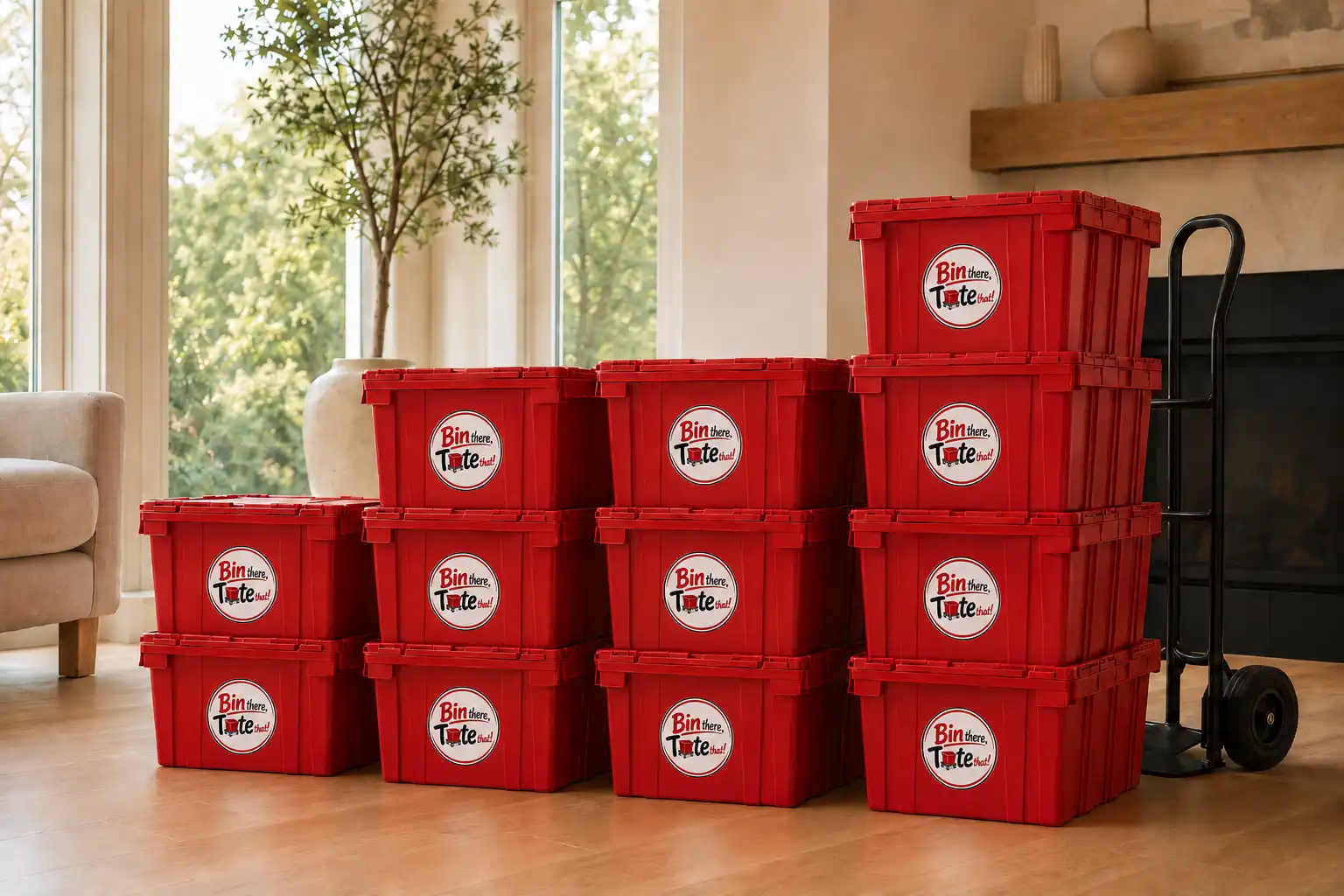
Here's the chapter the checkout page never mentions. Two weeks after a bin-funded move, the unpacking ends and fifty empty bins need somewhere to exist. They nest a little, but a nested stack of fifty is still a refrigerator-sized monument, and it moves into the garage, under the stairs, or into the storage unit you're now slightly less sure you can quit.
The exits all leak. Selling used bins on Marketplace recovers a fraction of what you paid, in exchange for another round of listings, messages, and porch pickups, the same economy we covered from the buyer's side in the free-box hunt. Donating works if somewhere will take fifty at once. Keeping "just in case" is what most people do, which converts the purchase into a decade of shelf rent for containers used once. And if the tower is the thing that keeps you paying for a storage unit even one extra month, the arithmetic gets grim fast: a single month of unit rent in the Portland area can rival what the bins cost in the first place. Bins are the rare purchase where the cost keeps accruing after you stop using them.
The move takes two weeks. Ownership takes a decade.
Renting vs. buying, the whole ledger
Both columns priced across the full ownership arc, not just checkout day, because checkout day is the only day the buying column ever wins cleanly.
| Ledger line | Buying plastic bins | Renting totes (us) |
|---|---|---|
| Payment model | Per bin, cheapest in multi-packs; you own the lot | One flat package, $97 to $257, two weeks |
| Getting fifty containers home | Your vehicle, several awkward loads | Delivered free to the door |
| Build grade | Consumer plastic; lids flex, corners crack under load | Commercial crates built for hundreds of moves |
| Dolly | Not part of the deal | Standard hand truck included |
| Two weeks after the move | Fifty empties seeking permanent housing | Collected free from the new place |
| Resale outlook | Pennies on the dollar, plus the selling labor | Nothing to resell; nothing to regret |
| Year five | A garage shelf serving containers used once | No year five; the story ended at pickup |
| Sanitation | Whatever the garage does to them over time | Washed and sanitized before each rental |
When buying is genuinely the right call
Purchase beats rental in one clean scenario and two partial ones, and we'll argue them properly rather than wave at them, because the pro-buying case deserves a fair hearing on a page hosted by a rental company.
- You need permanent storage bins anyway. If holiday decor, camping gear, and kid-clothes rotation were already going into bins, buying for the move and keeping them for storage makes the purchase do double duty. This is the strongest pro-buying case there is, and for the right household it wins outright.
- You move constantly. Someone relocating every year, a chronic renter or traveling professional, can amortize a bin fleet across moves, storage burden and all.
- You're leaving the region. Rentals need a pickup address inside the Portland-Vancouver metro areas; a one-way move to Boise needs containers that ride along.
The ten-year timeline of a bin purchase
For everyone outside those scenarios, a bin fleet's life tends to run like this. None of these entries are invented; ask anyone with a garage and a move behind them which year they're currently in.
- Week zero: buy the multi-packs, wrestle them home, feel prepared.
- Week two: move complete. The bins have now done everything you bought them for.
- Month two: the nested tower claims its garage corner. A few bins get promoted to sweater storage.
- Year two: lids have wandered. The tower is now two towers, neither complete.
- Year five: a Marketplace listing goes up, gets three lowballs, comes down.
- Year ten: the next move finally arrives. A third of the fleet is cracked, sun-brittled, or lidless, and the replacement shopping starts again.
The rental version of this timeline has two entries, delivery and pickup, which is why we run the service the way we do. What arrives at your door is the Portland tote rental option: heavier-duty crates than any store sells to consumers, on loan for exactly the window a move occupies.
Rent or buy: the short quiz
One honest question decides it: what do the containers do in month two? Answer that, and every row of the ledger above sorts itself into a column.
- They have a named storage job waiting after the move
- You relocate often enough to amortize a fleet
- Your destination is beyond the Portland-Vancouver metro areas
- The containers' only job is this one move
- Your garage, closet, and storage unit are already spoken for
- You'd rather pay $97 to $257 once than shelf-rent bins for a decade
- You want commercial-grade crates and a dolly without owning either
Rent-or-buy is the second half of a decision that starts with material. If you're still weighing plastic against paper at all, the broader cardboard-versus-totes verdict settles the first half.

Written by the Bin There, Tote That! team
We rent, deliver, wash, and pick up moving totes across the Portland and Vancouver metro areas every week, so the advice here comes from vans and doorsteps, not a content mill. Facts about competitors are checked at publication and date-stamped in the text.