Nobody wakes up excited to think about bin logistics until a stack of empty totes shows up on the porch and a moving deadline suddenly feels real. Moving bin rental delivery looks simple from the outside.
A truck drops off plastic containers, someone packs them, a truck picks them up. Underneath that simple picture sits a scheduling system built on route density, warehouse turnaround, and driver windows that most renters never see.
This guide breaks down what actually happens between order confirmation and final pickup, section by section, so you know exactly what to expect and why delays happen when they do.
The Complete Logistics Framework Behind Moving Bin Delivery and Drop Off
The logistics framework rests on three connected systems. Warehouse management software tracks bin inventory across every location and flags low stock before it becomes a shortage.
Route optimization software groups deliveries by zip code and time window, cutting drive time between stops. Fleet management tracks each truck's location in real time so dispatchers can reassign a delayed driver's remaining stops.
These systems share a single database, so a delivery confirmation in the field updates inventory counts right away. Without that connection, companies overbook bins and customers wait for containers that do not exist yet.
A Step-by-Step Breakdown of Commercial Bin Logistics and Rental Timelines
Commercial bin logistics run on fixed timelines that customers can plan around. Order placement happens anywhere from same day to several weeks out, depending on demand.
Confirmation and route assignment happen within twenty-four hours of order placement. Delivery happens on the scheduled date, within a set time block. The rental period runs on a standard cycle, often seven days, with extensions available for a daily fee.
Pickup scheduling opens once the customer confirms packing is complete. Retrieval happens within one to two business days of that request.
Each stage generates a timestamp, giving both sides a clear record if a dispute comes up.
| Stage | Typical Timeframe | Who Triggers It |
|---|---|---|
| Order placement | Same day to several weeks ahead | Customer |
| Route assignment | Within 24 hours of order | Warehouse team |
| Delivery | Scheduled date, set time block | Driver |
| Rental period | 7 days standard | Customer |
| Pickup request | Once packing is finished | Customer |
| Retrieval | 1 to 2 business days after request | Driver |
How Rental Operations Handle Bin Drop Offs and Retrieval Schedules
Rental operations batch drop offs and retrievals by neighborhood to keep fuel and labor costs down. A single driver might handle twelve to twenty stops per shift, grouped by proximity rather than order time.
Retrieval schedules depend on customer confirmation, since a truck sent to an unpacked house wastes a full stop. Most operations build a buffer day into the schedule, so a missed pickup window rolls to the next available slot rather than forcing a same day fix.
Dispatchers monitor driver progress through GPS pings and adjust the next stop order when traffic or an extended delivery pushes the route behind schedule.
The Technical Process of Scheduling Container Delivery and Final Pickup
Scheduling runs through a booking engine that checks live truck capacity against open calendar slots. Customers select a delivery date, and the system filters available time blocks based on driver headcount and truck volume for that zip code.
Final pickup scheduling works the same way but adds a packing confirmation step, since the system will not release a slot until the customer marks the bins ready.
Behind the interface, the booking engine writes each confirmed slot to a route database that syncs with driver tablets each morning. A canceled or rescheduled order frees that slot for another customer within minutes.
Understanding the Supply Chain and Logistics of Reusable Moving Bins
Reusable bin supply chains run in a loop instead of a straight line. Bins return from a completed rental, get inspected for cracks or missing lids, and move through a wash station before reentering inventory.
A single bin can complete over a hundred rental cycles before retirement, which is the core cost advantage over cardboard. Regional warehouses hold buffer stock to cover demand spikes during peak moving months, typically late spring through early fall.
When one warehouse runs short, companies transfer bins between locations rather than delay a delivery, keeping the loop moving even when local demand outpaces local supply.
For customers comparing reusable containers with traditional boxes, the process of renting plastic moving boxes is built around keeping those containers in circulation rather than treating them as single-use packing materials.
How Rental Services Coordinate Drop Off Routines and Equipment Pickup
Coordination between customer service and drivers relies on a shared ticketing system rather than phone calls back and forth. When a customer books a slot, the system generates a ticket with the address, bin count, and any access notes, like a gate code or apartment buzzer.
Drivers see that ticket on a tablet before arrival, cutting the guesswork out of every stop. Equipment pickup follows the same ticket structure, updated with a packing confirmation flag.
If a customer needs to add bins mid rental, the ticket updates in real time, and the next available driver picks up the added units on their existing route.
Inside the Delivery Pipeline and Return System of Reusable Plastic Bins
The delivery pipeline moves bins through five checkpoints. Clean bins sit in warehouse storage until an order pulls them for a route. A loading checkpoint confirms the correct bin count before the truck leaves.
A delivery checkpoint logs the drop with a timestamp and photo. A pickup checkpoint reverses that process at the end of the rental. A return checkpoint routes bins to inspection and washing before they re-enter storage.
Each checkpoint feeds inventory data back to the warehouse system, so managers see exactly how many bins sit in each stage at any moment, keeping the pipeline visible instead of a black box.
The Operational Lifecycle of Renting Moving Bins from Drop Off to Return
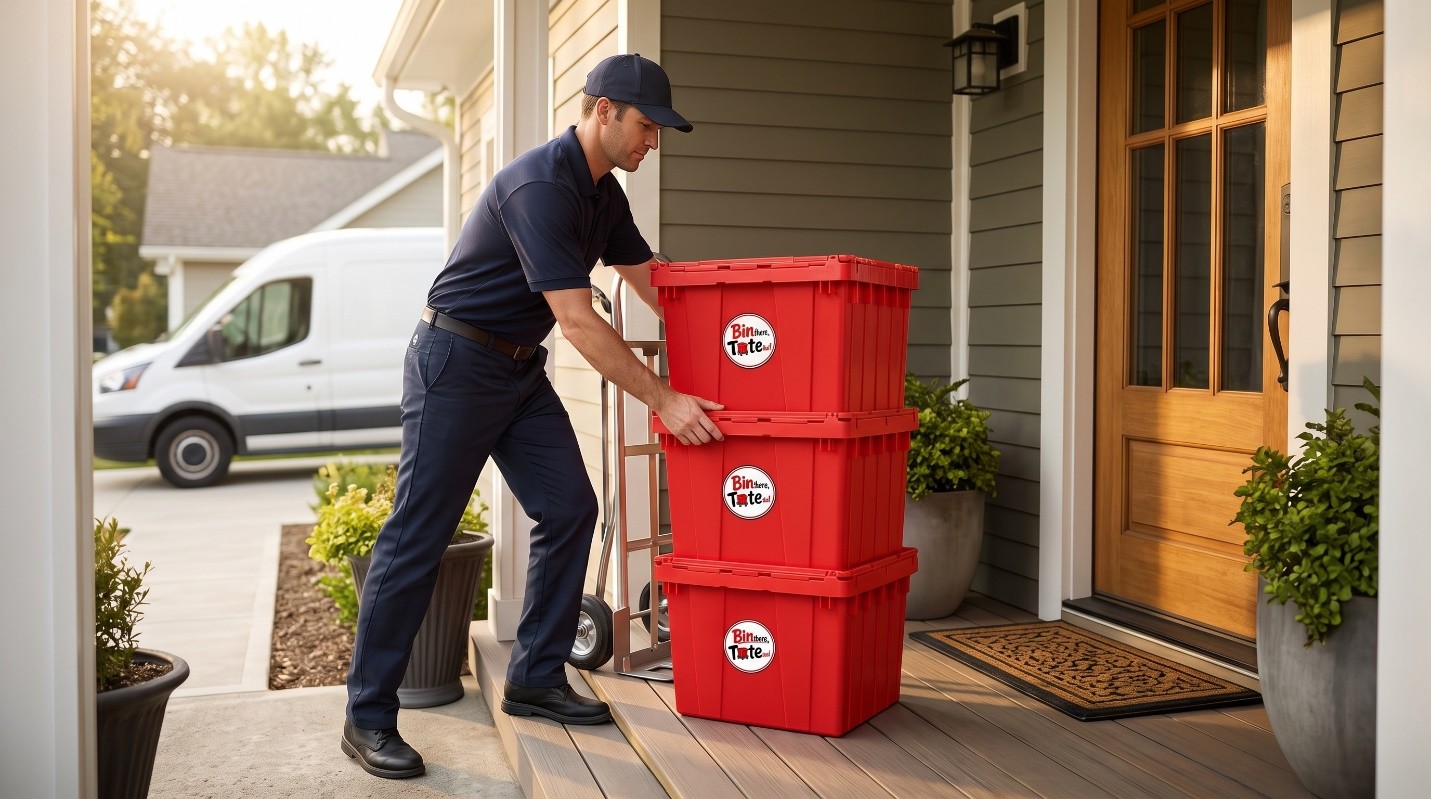
The rental lifecycle has four customer-facing phases. Booking sets the delivery date, bin count, and rental length.
Delivery puts the bins on the customer's property with a confirmed count. Use covers the packing period, which most companies cap between one and three weeks before additional fees apply.
Return closes the cycle once the driver retrieves every bin and confirms the count matches the delivery record. A mismatch at return, like a missing lid or a bin left behind, triggers a follow-up charge or a second pickup attempt.
Tracking each phase separately lets companies pinpoint exactly where a rental went wrong when a customer files a complaint.
How Logistics Teams Manage Smart Delivery and Retrieval of Moving Containers
Logistics teams manage container delivery through demand forecasting built on historical order data. A region that saw two hundred rentals in the first week of June last year gets staffed and stocked to match that pattern this year, with adjustments for growth.
Retrieval gets managed the same way, since pickup demand spikes exactly one rental cycle after a delivery spike. Route planning software recalculates driver assignments each morning based on new bookings, cancellations, and any weather delay from the day before.
Teams that skip this daily recalculation end up with trucks sitting idle in one zip code while another zip code runs a backlog.
A Clear Look into the Delivery and Pickup Mechanics of Moving Bins
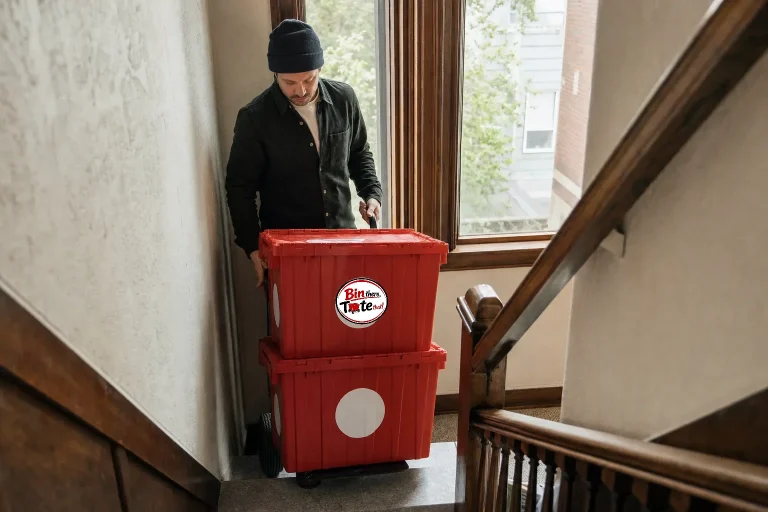
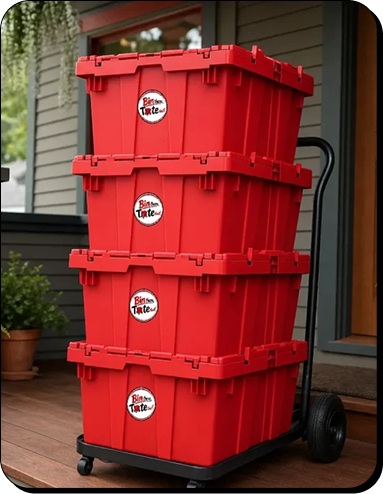
The physical mechanics of bin delivery come down to weight, stacking, and truck capacity. A standard moving bin holds between fifty and seventy pounds when packed full, and trucks carry a fixed number of bins per route based on axle weight limits, not just cargo space.
Drivers stack empty bins during delivery to save truck space and unstack them at the drop point. Pickup reverses the process, with drivers restacking packed bins for the return trip.
Route capacity planning accounts for this weight limit first, since a truck that hits its weight cap with ten stops left cannot simply add more bins to the load.
The Short Answer
Moving bin rental delivery works because every step feeds the next system immediately. A booking updates inventory. A delivery starts the wash and return countdown. A pickup request triggers the next driver assignment.
Book early during peak months and confirm packing the moment you finish, since both actions move your bins through the schedule faster. A moving checklist can also help keep those preparation steps organized before delivery and pickup.

Written by the Bin There, Tote That! team
We rent, deliver, wash, and pick up moving totes across the Portland and Vancouver metro area every week, so the advice here comes from vans and doorsteps, not a content mill. Facts about competitors are checked at publication and date-stamped in the text.